

 i
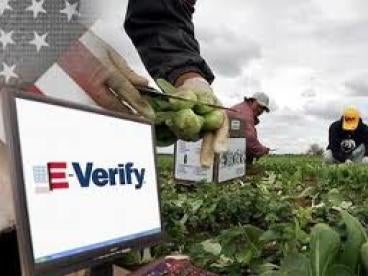
iPerhaps in effort to reign in the rapidly growing number of individualized city and local E-Verify laws and simultaneously stimulate the California economy, Governor Jerry Brown signed the “Employment Acceleration Act of 2011” (AB 1236) which will take effect on January 1, 2012. This bill prohibits the state from requiring employers to use E-Verify. In a nutshell, the new law prohibits the state, cities or counties from requiring employers to use E-Verify, an electronic employment verification system that uses employees’ Social Security numbers to determine work eligibility. The bill makes certain exceptions for city or county workers, and also takes into account that E-Verify is a requirement for particular employers under federal or as a condition for employers receiving federal funds.
While E-Verify, when used in conjunction with other best practices, can greatly assist employers in ensuring an authorized workforce, these random E-Verify laws may confuse employers. California appears to be taking a stance on the issue, recognizing, perhaps, that a patchwork of local immigration laws with different requirements, different phase in dates, and enormous penalties at city and state levels makes it difficult for national companies to operate without running afoul of a law (or two). Will the federal government follow suit? It costs companies time and money to keep abreast of these laws - and even more time and money to determine whether or not the laws apply to their businesses. Our experience is that many public companies are unaware of what is required of them in terms of E-Verify and how the procedures for complying with the state laws should be implemented internally.
In fact based on our experience, many companies that are required to use E-Verify under the Federal Contractor FAR rule still have not properly flowed down the regulations to their subcontractors, vendors and suppliers even though the regulation was finalized over two years ago . The feeling seems to be, "If we ignore the requirement long enough it will just go away." That's not likely - monitoring of compliance will probably become more sophisticated on the part of the government. The time is now to begin tackling the E-Verify requirement, general I-9 compliance and the ever expanding list of requirements created by state laws. It's not an easy task considering the current economy, globalization and the long list of priorities businesses must deal with. Nonetheless, even if the odds are low that a company will be scrutinized, the list of potential perils - debarment, loss of business licenses, payback of deductions taken on workers ultimately determined to be unauthorized, monetary fines and penalties - is cause for serious concern.
While the E-Verify California law makes things easier and there has been a lull in national immigration compliance enforcement, national employers should count on a continuing increase in E-Verify mandates and a new round of ICE I-9 enforcement inspections, along with a resurgence of criminal and DOJ investigations in this area.




