


 i
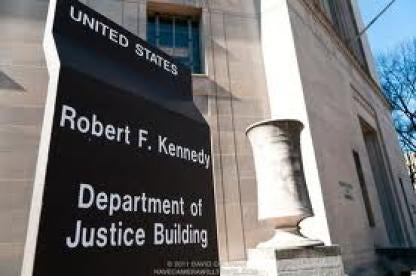
iThe U.S. Department of Justice Antitrust Division, one of the two federal antitrust authorities, recently released an updated version of its Policy Guide to Merger Remedies. This guide, which replaces the previous 2004 version, reflects changes in the merger landscape and in U.S. merger enforcement policy. In particular, the new policy guide affirms the Antitrust Division’s evolving attitude towards the use of conduct remedies to resolve competitive concerns, particularly for vertical mergers, i.e., mergers between parties situated at different levels of the supply chain.
The policy guide is a tool used by Antitrust Division staff in analyzing proposed remedies in merger matters and is also intended to provide transparency to the business community, antitrust practitioners, and the broader public regarding the Antitrust Division's approach to merger remedies. Key principles applied in analyzing merger remedies remain the same in the latest version of the guide, and include: (1) effectively preserving competition is the key to an appropriate merger remedy; (2) remedies should focus on preserving competition, not protecting individual competitors; and (3) remedies must be based on careful application of legal and economic principles to the particular facts of a specific case.
Merger remedies to resolve competitive concerns take two basic forms: structural remedies, which generally involve the sale of physical assets by the merging firms (or in some cases the sale or licensing of intellectual property rights), and conduct remedies (also known as behavioral remedies), which usually involve provisions that manage or regulate the merged firm's post-merger business conduct. Conduct remedies can take various forms, including restrictions on certain contracting practices, non-discrimination provisions, anti-retaliation provisions, and information firewalls, among others. The 2004 version of the policy guide strongly disfavored the use of conduct remedies, as opposed to structural remedies, in all but a limited number of circumstances, noting that conduct remedies are more difficult to craft, more cumbersome and costly to administer, and easier than a structural remedy to circumvent. In sharp contrast, the new policy guide takes the position that, depending on the circumstances of a particular case, conduct relief, either alone or in combination with structural relief, may be the optimal choice. The new guide explains that for many vertical transactions, structural remedies can eliminate a merger’s potential efficiencies, whereas tailored conduct relief can prevent behavior that might harm consumers while still preserving the beneficial aspects of the merger. Even for transactions that raise horizontal issues (i.e., involving firms that are actual or potential competitors), the 2011 policy guide notes that although structural remedies are the predominant tool to be used, conduct remedies in combination with structural remedies may be most appropriate in certain cases. The new policy guide highlights the importance of developing clear remedies that can be properly enforced.
There are other, more subtle, differences between the new policy guide and the 2004 version. In the case of divestitures where the merging parties are not divesting a stand-alone business, the new guide notes that the Antitrust Division may require that an upfront buyer for the divestiture assets be identified and approved, or the use of a "crown jewel" provision whereby if an acceptable purchaser cannot be found for the specified divestiture package within a certain period, the parties include additional valuable assets to make the package more attractive to potential purchasers. This position is more favorable towards the use of crown jewels, which were strongly disfavored under the 2004 version of the guide. The new version of the policy guide also highlights the role of the Antitrust Division's recently created Office of the General Counsel, which will be principally responsible for enforcing Antitrust Division consent decrees.
The 2011 policy guide comes at a time when there appears to be a heightened interest, especially by the Antitrust Division, in mergers involving vertical concerns. Recent examples include Google’s $700 million acquisition of ITA Software, the merger of Ticketmaster with Live Nation Inc., and Comcast’s multi-billion dollar media joint venture with NBC Universal. All three transactions involved a vertical component, underwent lengthy DOJ antitrust reviews and were found to raise antitrust concerns. They were ultimately cleared, but only after the parties agreed to settlements involving conduct remedies (the Ticketmaster/Live Nation consent decree also included divestitures). Although the government has displayed an appetite for more enforcement based on vertical theories of competitive harm, in these settlements it has shown a greater willingness to accept creative and in some cases complex remedies to address concerns while permitting transactions to proceed. The new policy guide affirms this shift in merger enforcement policy.
Given the increased scrutiny of vertical transactions, firms should be aware that just because the other party to a proposed transaction is not a head-to-head competitor does not necessarily guarantee the absence of an antitrust problem. However, in deals where the competitive issue is vertical rather than horizontal, the new policy guide clearly paves a path for the antitrust agencies, or at least the Antitrust Division, to entertain various remedies that fall short of full asset divestitures.




