




May 24, 2012

Homeowners’ Claims Against Insurer for Hail Damage Will Not Be Treated As Class Action

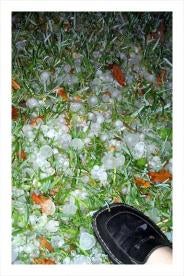
In Kartman, et al. v. State Farm Mutual Auto. Ins. Co., et al., the Seventh Circuit held that an injunctive-relief class of homeowners was improperly certified because the requested injunction was neither “appropriate” nor “final,” as required by Federal Rule of Civil Procedure 23(b)(2). The plaintiffs, a group of homeowners who sustained damage to the roofs of their homes as a result of a severe hailstorm, filed a proposed class action against State Farm alleging breach of contract, bad faith, and unjust enrichment. The district court declined to certify a Rule 23(b)(3) damages class on the grounds that each plaintiff’s claim of underpayment required an individualized factual inquiry on the merits. However, the district court certified an injunctive-relief class under Rule 23(b)(2) to determine whether State Farm should be required to reinspect policyholders’ roofs using a “uniform and objective standard.” The district court defined the class as all policyholders who submitted claims resulting from the hailstorm and did not receive an entirely new roof.

On State Farm’s appeal, the Seventh Circuit first pointed out that while the plaintiffs advanced several legal theories, they had only one cognizable injury, namely the alleged underpayment of their insurance claims. The only remedy for their action was damages, for which, as the district court properly held, they were not entitled to Rule 23(b)(3) certification. The plaintiffs’ claim for injunctive relief created the illusion that in addition to State Farm’s duty to compensate insured homeowners, it had an independent duty to examine all hail-damaged roofs in accordance with a particular standard. The court found no such duty exists in either contract or tort. Further, while State Farm’s allegedly inconsistent approach to performing damage estimations may have been evidence of underpayment of some claims, it did not independently establish liability or support a separate injunctive remedy.

In analyzing whether injunctive-class certification was appropriate, the court noted that Rule 23(b)(2) requires that the contemplated injunctive relief be both “appropriate respecting the class as a whole” and “final.” The plaintiffs could not demonstrate the most basic requirement for an injunction—their alleged injury could have been fully remedied by money damages, and therefore, they had not suffered irreparable harm. Further, the court pointed out injunctive relief would have imposed an inappropriate hardship on State Farm. As defined by the district court, the class of plaintiffs potentially included policyholders who had been fully compensated even though they were not given new roofs, yet they would have been entitled to a reinspection. Given that the hailstorm generated over 7,000 claims, complying with such an injunction would have been immensely expensive. Finally, far from providing “final” relief, a class-wide roof reinspection would only have initiated thousands of individualized damage proceedings.


 

Kartman, et al. v. State Farm Mutual Auto. Ins. Co,. et al., 2011 WL 488879
(7th Cir. February 14, 2011)

©2012 von Briesen & Roper, s.c

About the Author

Chair of the Litigation and Risk Management Practice Group

Heidi is a Shareholder and Chair of the Litigation and Risk Management Practice Group. Her practice focuses on insurance coverage litigation, commercial disputes, constitutional law, construction disputes, environmental litigation, and complex litigation.

Heidi lectures on a wide variety of topics including environmental insurance coverage, environmental issues, bad faith litigation, motor carrier issues, and advertising injury liability/personal injury liability coverage.

She is a member of the American and Milwaukee Bar Association, the State Bar of Wisconsin, the Defense...

414-287-1258

About the Author

Beth Kushner specializes in complex litigation and has successfully handled a broad range of business and commercial disputes, product liability claims, fraud and RICO cases, antitrust disputes, and class actions. She has a particular expertise in cases which involve high exposure and difficult facts, and her clients appreciate her creative, pragmatic, and cost-effective approach to litigation.

414-287-1373

Boost: AJAX core statistics

Legal Disclaimer

You are responsible for reading, understanding and agreeing to the National Law Review's (NLR’s) and the National Law Forum LLC's  Terms of Use and Privacy Policy before using the National Law Review website. The National Law Review is a free to use, no-log in database of legal and business articles. The content and links on www.NatLawReview.com are intended for general information purposes only. Any legal analysis, legislative updates or other content and links should not be construed as legal or professional advice or a substitute for such advice. No attorney-client or confidential relationship is formed by the transmission of information between you and the National Law Review website or any of the law firms, attorneys or other professionals or organizations who include content on the National Law Review website. If you require legal or professional advice, kindly contact an attorney or other suitable professional advisor.  

Some states have laws and ethical rules regarding solicitation and advertisement practices by attorneys and/or other professionals. NLR does not accept advertising from attorneys or law firms. The National Law Review is not a law firm nor is www.NatLawReview.com  intended to be an advertisement or a referral service for attorneys and/or other professionals. The NLR does not wish, nor does it intend, to solicit the business of anyone or to refer anyone to an attorney or other professional.  NLR does not answer legal questions nor will we refer you to an attorney or other professional if you request such information from us. 

Under certain state laws the following statements may be required on this website and we have included them in order to be in full compliance with these rules. The choice of a lawyer or other professional is an important decision and should not be based solely upon advertisements. Attorney Advertising Notice: Prior results do not guarantee a similar outcome. Statement in compliance with Texas Rules of Professional Conduct. Unless otherwise noted, attorneys are not certified by the Texas Board of Legal Specialization, nor can NLR attest to the accuracy of any notation of Legal Specialization or other Professional Credentials.


