


Advertisement

May 21, 2013

NEW YORK TRIAL COURT DENIES INSURED’S CLAIM FOR ATTORNEYS FEES AND COSTS PAID IN CONNECTION WITH THE SETTLEMENT OF PUBLIC INVESTIGATIONS FOR “MARKET TIMING” OF MUTUAL FUNDS

On March 10, 2009, the Supreme Court of the State of New York, County of New York, granted Summary Judgment in favor of Select Insurance Company against Millennium Partners, L.P. with respect to Millennium’s claim to recover defense costs that it paid in connection with the settlement of public investigations against it for market timing of mutual funds.  Millennium Partners, L.P. v. Select Insurance Company, et al., Index No: 601878/2007(Sup. Ct. N.Y. Mar. 10, 2009).  In its suit, Millennium alleged that it incurred defense costs of over $19 million, but sought reimbursement up to the policy limit of $10 million.  Select issued Mutual Fund and Directors & Officers Errors and Omissions Liability Insurance to Millennium, which provided coverage for losses up to $10 million for all claims that were first made during the policy period.  The policy defined loss to exclude punitive or exemplary damages, criminal or civil fines or penalties imposed by law or matters uninsurable under the law pursuant to which the policy in construed. 

In July and September 2003, the Attorney General of the State of New York and the SEC commenced investigations into Millennium’s trading practices relating to market timing and late trading of mutual funds.  In November 2005, the SEC and the Attorney General both advised Millennium that it would be charged with State and Federal securities law violations for fraudulent market timing practices.  Millennium entered into settlement agreements, in which it consented to the entry of an SEC order instituting administrative and cease and desist proceedings and to the entry of an assurance of discontinuance with the Attorney General’s office.  The SEC order made factual findings based on Millennium’s settlement offer.  Under the SEC order, Millennium agreed to certain remedial measures and to pay “$148 million in disgorgement”.  Additionally, Millennium’s principals also agreed to pay substantial civil penalties.  The Attorney General’s discontinuance provided for the same $148 million payment by Millennium “in disgorgement and restitution” and the same civil penalties. 

Millennium requested reimbursement from Select for the legal fees and expenses that Millennium had paid as a result of the investigations.  Select denied liability from the loss resulting from the claim, contending that Millennium was not entitled as a matter of law to recover its defense costs, because these costs were incurred in connection with claims that are not covered by the policy.  Particularly, Select contended that the claims were for, and the settlement required, disgorgement of improperly acquired funds; that sums paid for disgorgement  by losses uninsurable by law; and, that the losses are therefore subject to policy exclusion.  Millennium argued in opposition to Select’s Motion for Summary Judgment that a tribal issue of fact existed as to whether the amount it was required to disgorge in its settlement agreements represented improperly acquired funds. 

The Court rejected Millennium’s argument, noting that the very purpose of disgorgement is to “deprive a party of ill-gotten gains and to deter improper misconduct.”  Furthermore, the Court reasoned that contrary to Millennium’s contention, the settlements conclusively link the disgorgement to improperly acquired funds.  Based on these considerations, the Trial Court entered Summary Judgment in favor of Select.

© 2009 Clark HIll PLC.

About the Author

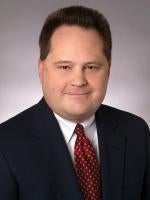
Benjamin A. Blume is a member in Clark Hill’s Chicago office. He is co-chair in Clark Hill’s new Insurance and Reinsurance Practice Group, which will focus on representing client’s in all aspects of the insurance and reinsurance business, including claims counseling, litigation and arbitration, business transactions and tax matters, regulatory issues and government relations, and formation of captive insurers and risk retention groups. His practice includes the handling of issues involving commercials, primary, umbrella, excess and surplus lines, and...

312-985-5937

John D. LaBarbera is a member in Clark Hill’s Chicago office. He is co-chair in Clark Hill’s new Insurance and Reinsurance Practice Group, which will focus on representing client’s in all aspects of the insurance and reinsurance business, including claims counseling, litigation and arbitration, business transactions and tax matters, regulatory issues and government relations, and formation of captive insurers and risk retention groups. He represents insurers in all aspects of their business, including claims counseling, litigation, and dispute resolution...

312-985-5936

Boost: AJAX core statistics

Legal Disclaimer

You are responsible for reading, understanding and agreeing to the National Law Review's (NLR’s) and the National Law Forum LLC's  Terms of Use and Privacy Policy before using the National Law Review website. The National Law Review is a free to use, no-log in database of legal and business articles. The content and links on www.NatLawReview.com are intended for general information purposes only. Any legal analysis, legislative updates or other content and links should not be construed as legal or professional advice or a substitute for such advice. No attorney-client or confidential relationship is formed by the transmission of information between you and the National Law Review website or any of the law firms, attorneys or other professionals or organizations who include content on the National Law Review website. If you require legal or professional advice, kindly contact an attorney or other suitable professional advisor.  

Some states have laws and ethical rules regarding solicitation and advertisement practices by attorneys and/or other professionals. NLR does not accept advertising from attorneys or law firms. The National Law Review is not a law firm nor is www.NatLawReview.com  intended to be an advertisement or a referral service for attorneys and/or other professionals. The NLR does not wish, nor does it intend, to solicit the business of anyone or to refer anyone to an attorney or other professional.  NLR does not answer legal questions nor will we refer you to an attorney or other professional if you request such information from us. 

Under certain state laws the following statements may be required on this website and we have included them in order to be in full compliance with these rules. The choice of a lawyer or other professional is an important decision and should not be based solely upon advertisements. Attorney Advertising Notice: Prior results do not guarantee a similar outcome. Statement in compliance with Texas Rules of Professional Conduct. Unless otherwise noted, attorneys are not certified by the Texas Board of Legal Specialization, nor can NLR attest to the accuracy of any notation of Legal Specialization or other Professional Credentials.


