

May 25, 2012

U.S. Cities Facing $300 Billion Exposure to Storm Surge

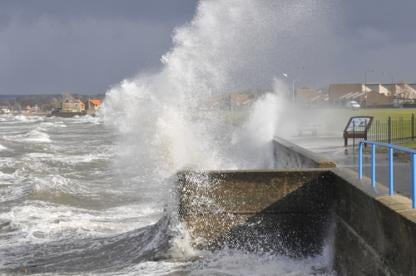
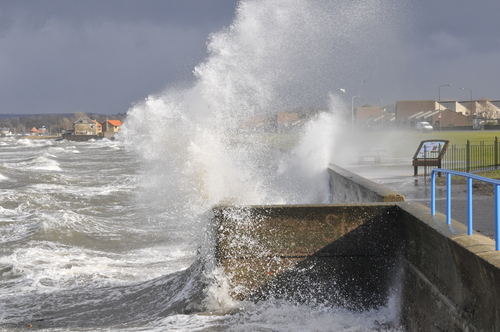
A recent report illustrates the dire nature of storm surge exposure in several major U.S. cities. The Storm Surge Report, developed by CoreLogic, revealed hurricane-driven storm surge flooding could cause billions in damage to residential structures in 2011.

“The local flood zones defined by FEMA in high-risk coastal regions provide a great deal of exposure data for homes in the path of flood waters, but understanding the additional layer of risk posed by a storm surge is critical for homeowners, emergency response teams, insurance companies and many others to plan and prepare for natural catastrophes,” said Dr. Howard Botts, executive vice president and director of database development for CoreLogic Spatial Solutions. “As the report shows, in many cases, homes exposed to potential storm-surge inundation are located outside of designated flood zones, and those homeowners need to be aware of their vulnerability to severe damage and property losses.”

Of the various areas studied in the report, Long Island, New York, was found to have the highest exposure to risk of storm surge. The top 10 breaks down as follows:

  1. Long Island, NY – $99 billion
  2. Miami-Dade, FL – $44.9 billion
  3. Virginia Beach, VA – $44.6 billion
  4. New Orleans, LA – $39 billion
  5. Tampa, FL – $27 billion
  6. Houston, TX – $20 billion
  7. Jacksonville, FL – $19.6 billion
  8. Charleston, SC – $17.7 billion
  9. Corpus Christi, TX – $4.7 billion
  10. Mobile, AL – $3 billion

Considering that this year’s hurricane forecast calls for 16 named storms and five major hurricanes for the 2011 season, it could be a costly storm season for the 10 cities listed above. As more and more coastal areas succumb to residential building, the cost of such natural disasters increases exponentially. When will we learn?

 

Risk Management Magazine and Risk Management Monitor. Copyright 2012 Risk and Insurance Management Society, Inc. All rights reserved.

About the Author

Editor

Emily Holbrook is the editor of Risk Management magazine and the Risk Management Monitor blog.

212-655-5915

Boost: AJAX core statistics

Legal Disclaimer

You are responsible for reading, understanding and agreeing to the National Law Review's (NLR’s) and the National Law Forum LLC's  Terms of Use and Privacy Policy before using the National Law Review website. The National Law Review is a free to use, no-log in database of legal and business articles. The content and links on www.NatLawReview.com are intended for general information purposes only. Any legal analysis, legislative updates or other content and links should not be construed as legal or professional advice or a substitute for such advice. No attorney-client or confidential relationship is formed by the transmission of information between you and the National Law Review website or any of the law firms, attorneys or other professionals or organizations who include content on the National Law Review website. If you require legal or professional advice, kindly contact an attorney or other suitable professional advisor.  

Some states have laws and ethical rules regarding solicitation and advertisement practices by attorneys and/or other professionals. NLR does not accept advertising from attorneys or law firms. The National Law Review is not a law firm nor is www.NatLawReview.com  intended to be an advertisement or a referral service for attorneys and/or other professionals. The NLR does not wish, nor does it intend, to solicit the business of anyone or to refer anyone to an attorney or other professional.  NLR does not answer legal questions nor will we refer you to an attorney or other professional if you request such information from us. 

Under certain state laws the following statements may be required on this website and we have included them in order to be in full compliance with these rules. The choice of a lawyer or other professional is an important decision and should not be based solely upon advertisements. Attorney Advertising Notice: Prior results do not guarantee a similar outcome. Statement in compliance with Texas Rules of Professional Conduct. Unless otherwise noted, attorneys are not certified by the Texas Board of Legal Specialization, nor can NLR attest to the accuracy of any notation of Legal Specialization or other Professional Credentials.


