



 i
iOn the interwebs, things can "go viral."
From kittens to laughing babies to misbehaving police and politicians, we send it and share it through that series of tubes and pretty soon it is lodged like a blood clot in our collective consciousness.
We can't look away.
When lawyers are involved, it is seldom the cute kitten kind of viral. It usually is lawyers behaving badly, even when they are in the process of asserting rights legitimately held by a client.
But the ABA Journal recently carried a headline about a cease and desist letter that went viral for being so polite. After the jump, I some thoughts about why you don't have to be a jerk to be a superior lawyer.
 This is the demand letter that has sparked all the hubbub.
Christy Susman, the author of the letter, must have missed that class in law school where they teach us how to rattle sabers and pound tables and grow red in the face.
Instead of all that, she asserted her client's interests straight up, in a way that does credit to the client and might actually get things done.
She identified the client's property right, identified what needed to be done, made a case that it is in the opponent's best interest to give way, and offered a potential way forward.She never raised her voice.
Of course she could have have cited a bunch of cases, peppered the letter with statutes, pulled out all the adverbs, and threatened the vile offender with legal Armageddon.
Or, as she did, she could make first contact by writing a letter that might actually work.
Susman's letter reminded me of an anecdote from a book that I'm reading now. The book is "Quiet: The Power Of Introverts In A World That Can't Stop Talking" by Susan Cain.
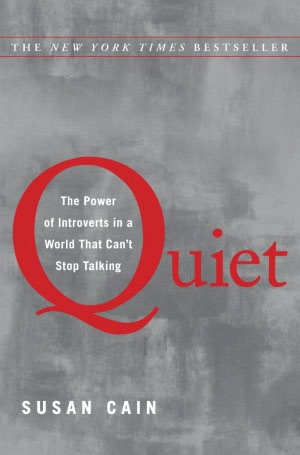 In the opening pages Cain recounts a real negotiation in which a lawyer and a confirmed introvert was confronted with the archetypal "alpha dog" lawyers and clients on the other side of a deal. The lawyer was so introverted, in fact that she actually threw up on the way to class in Harvard Law School.
Cain later reveals that the introverted lawyer was actually her.
In the negotiation, Cain could have retreated and let the table pounding alpha dogs overwhelm her. Or she could have tried to be an alpha dog herself.
Instead, she used the strengths of her own quieter personality to represent the client's interests and communicate in a way that was effective--so much so that after that deal closed, the alpha dog clients hired her over their previous pit bull.
I wish Susan Cain and Christy Susman were contagious.
In America, we overvalue the alpha dog. One result (among many) is lawyers behaving badly. Even lawyers who aren't by nature the "alpha dog" put on that persona because they think that's just the way it is done.
As a consequence, our reputation as unprincipled mercenaries with stunted social skills is so deep that just being a lawyer is a bad thing. Indeed, in this political season one can see attack adds from major-party candidates trying to convince the voting public not to vote for that other guy because he is a lawyer--the "L-Word" becoming a sneer and an epithet.
Is this where we are? Accusing someone of being a lawyer is roughly the same as accusing them of corruption or graft?
I have sent a few demand letters in the past 15 years. None of them have ever wound up online, and I'm OK with that. There are only two ways to become famous for a demand letter, and most of the time it is because the letter is awful and the author is a jerk.
I think I'd rather try to give the client a win. Win or lose, I'd rather keep my soul. Thanks.






