
 i
iIn business, it is probably one of the worst calls you can receive:
“John, this is Mark, the manager of the Westside plant. We’ve had an accident on site. An employee fell from the plant roof and it doesn’t look good. 911 has been called and they are on their way. What should we do?”
What should we do, indeed? Hopefully, you will never get one of these calls.
In 2009, the last year for which statistics are available, there were 4,340 workplace fatalities in the United States.
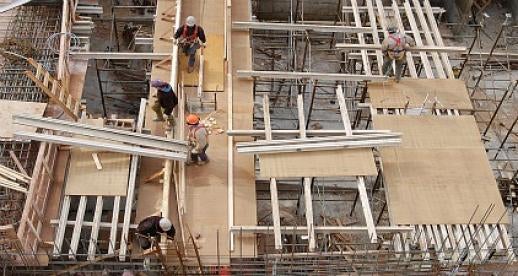
Construction was the segment of the economy with the single largest number of fatalities, accounting for almost 20 percent of the total. Overall fatalities were down 17 percent from the previous year, and much of this decrease can be credited to economic factors as total work hours also fell by six percent. Even with the declines, there were still approximately 4,000 people who received that call. What did they do? What should they have done?
After ensuring that medical and emergency response personnel have been called and are on site to treat the employee and secure the site from any further accidents, the employer’s thoughts have to turn to what will happen next. There will be a police investigation. Most likely there will be an investigation by the Occupational Safety and Health Administration (OSHA). All of the interested insurance companies will want to conduct their own investigations. It has been this author’s experience that most workplace fatalities are followed with as many as three different lawsuits:
- the workman’s compensation suit related to death benefits;
- the OSHA suit related to the citation for failing to follow OSHA requirements; and
- a wrongful death lawsuit.
Rarely is any event in business followed with such a high probability, almost a certainty, of litigation. If you know you are going to be involved in litigation, the best thing you can do to prepare is have a lawyer arrive on site as soon as possible after the accident and guide you through the process.
In these cases, there are myriad issues to be considered and countless decisions to be made. Any one of them could be critical to one, or all three, of the suits coming down the road. One major issue is access to the site. Who must you let on site? Of course, the emergency response and the police must be provided immediate and unfettered access.
Access by OSHA may present slightly different considerations. The employer of the affected employee has to call OSHA within eight hours of learning of a fatality or accident in which three or more employees were hospitalized.1 But when to call them, and how to provide access to the site and to employees once they arrive, are decisions that can only be made after considering the specific facts of the case. Witness interviews present a number of issues. OSHA has a statutory right to privately interview employees. An insured generally has an obligation to assist its insurer in completing its investigation of the event of loss. In and around these two precepts, many questions swirl, such as:
- Does an employee have a right to refuse to be interviewed?
- Can an employee ask for someone else to be present during the interview?
- If it is a union project, can the employee demand that a shop steward be present?
- Can the shop steward demand to be present even if the employee doesn’t ask to be accompanied?
- Does OSHA have a right to interview management employees without an attorney present?
- Does a company have an obligation to assist the insurers of its subcontractors in their investigations?
- Should employees and management sign statements?
- Does OSHA, or others, have the right to record statements and meetings during the investigation?
- When does a company want to take its own statements, and who should take them?
Another major issue is preservation of evidence or its opposite, spoliation of evidence. There is often tension between the obligation to preserve the evidence and the desire to clean up the worksite and continue on with work, or in the case of a plant accident, resume what may be critical production. This raises key issues related to resuming the work. After the police release the site back to the controlling employer, what is OSHA’s ability to keep the site shut down and prevent additional work? In the case of rental equipment, there can be a pull between the rental company, who, pursuant to the rental agreement, may have the right to immediately retake possession, and the renter, who may want to ensure that key features, and possible shortcomings, of the piece of equipment are documented before it leaves the site, and that after it leaves the site its condition is preserved.
The lawyer must evaluate the value to future litigation of gathering all possible physical evidence, including possibly taking a piece of expensive equipment out of production and storing it until the statute of limitations expires, versus the costs associated with doing so. Maybe the key evidence is a section of handrail that appears to have failed and it can be easily cut out and put in storage for two years. Maybe the key evidence is a piece of equipment and the specific conditions of the area in question can be photo-documented and measured and the equipment put back in service. Maybe not.
There are many other issues that must be considered and many real-time decisions to be made. Given the likelihood of litigation, most of these decision are best considered through the eyes of a litigation attorney who can help the client strike a balance between its interests in cooperating in the investigation and its interests in protecting itself in the multiple lawsuits that are most likely coming down the road.
1. The window for a covered fatality or hospitalization extends for 30 days from the incident. If an accident occurs and the employee dies 29 days after the accident, the employer must then notify OSHA. Similarly, if two employees are hospitalized immediately after an accident and a third employee is hospitalized two days later, the employer’s obligation to notify OSHA obtains when the employer learns of the third hospitalization.