


 i
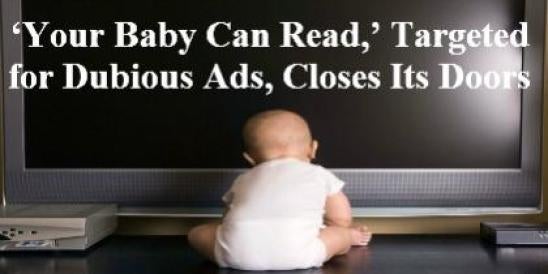
iAfter nearly a decade of persuading hundreds of thousands of parents that their babies were geniuses, the popular company, Your Baby Can Read, is shutting its doors. Its demise is the result of an FTC investigation prompted by the Campaign for a Commercial-Free Childhood advocacy group, which challenged claims by the company that newborns have the ability to absorb reading and spelling skills when they are as young as three months old. According to the company’s website, the cost of fighting these legal battles has left the company with no option but to close.
Your Baby Can Read consists of interrelated videos, flash cards and books designed to teach infants as young as three months old to read. Developed in the late 1990s by Robert Titzer, an educator with a Ph.D. in human performance from Indiana University, the product claims that babies have a small window in which they absorb spelling at an extraordinary pace. Although these claims have never been substantiated through any kind of credible research, fans of the products, which are priced at $200, have given them glowing reviews. More than a million families have used the products, which the company extensively advertised on TV, at exhibitions, and on its own website, Facebook page and YouTube channel.
In April 2011, a class of consumers who purchased the educational programs filed a class action complaint against the company in California challenging the effectiveness of the product. Additionally, the Boston-based Campaign for a Commercial-Free Childhood (CCFC) filed a complaint against the company with the FTC, leading the way for a series of campaigns against what critics call the “genius baby” industry. The national watchdog group previously successfully campaigned against the way that the “Baby Einstein” program marketed its products. In its complaint with the FTC, CCFC argued that Your Baby Can Read’s claims of teaching infants to read lacked scientific support. The group requested that the FTC stop the company from continuing its allegedly deceptive marketing practices and that the company offer full refunds to “all parents who have been duped.” According to CCFC director Dr. Susan Linn, the company “exploited parents’ natural tendency to want what’s best for their children” by making grandiose promises that find no support in science.
The problem with these types of educational products appears to be twofold. First, doctors and scientists who have tested the products have reportedly found that infants using the products are not reading, but rather are memorizing the shapes of the letters presented. Second, as the CCFC points out, the program can actually be harmful to children, as it encourages them to sit in front of television screens and computer monitors, getting them “hooked on screens” too early in life. In fact, the group notes that if parents follow the “Your Baby Can Read” instructions, by nine months, babies would have spent more than a full week of 24-hour days in front of a screen.
Although the company is going out of business, the FTC will not automatically cease its investigation. The FTC says it aims to protect the most vulnerable classes in society — and perhaps none are more vulnerable than young children, or, in this case, their overachieving parents who just want their bragging rights. It will be interesting to see which group of consumers will come out on top in the FTC investigation – the thousands of parents who were satisfied with the product or the class-action parents whose children were perhaps not as smart as they believed them to be.




