


 i
iWe have all heard about the new post grant review (PGR) aspect of the patent reform legislation. It is supposed to provide a mechanism for review of the patent initiated in the first year of the patent’s issue. Please indulge me for a bit as I explore what this may mean for the patent system as a whole.
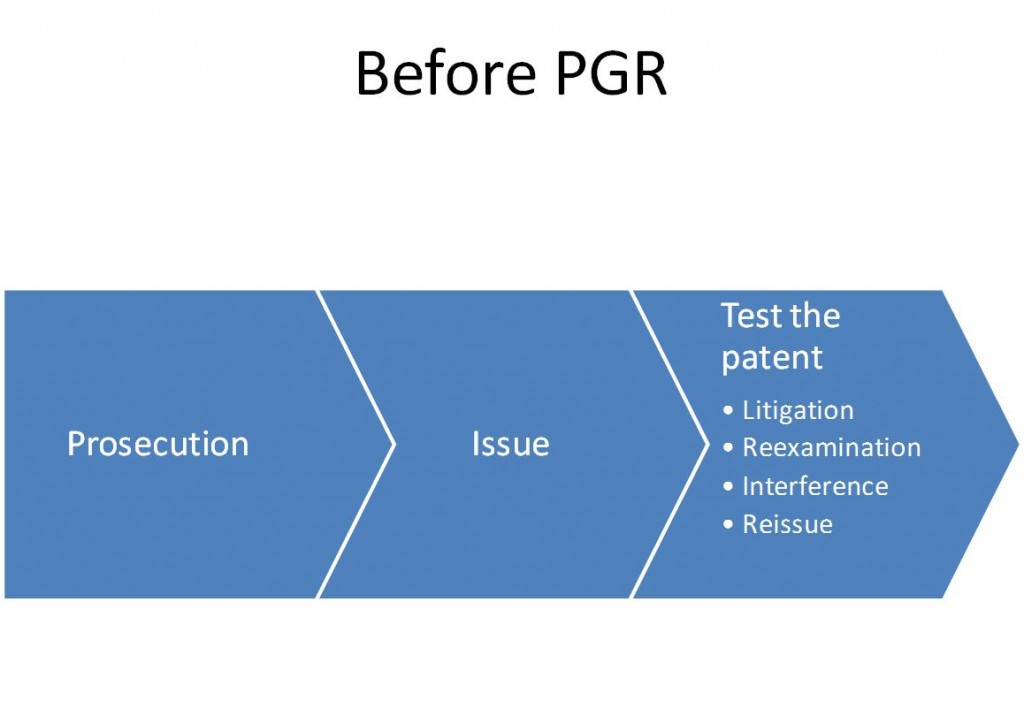
Before PGR, the typical process was to prosecute the patent application, issue a patent, and then over time seek to enforce the patent. Any number of tests of the patent could be conducted, such as litigation, reexamination, interference and reissue. It could easily be a decade before the results of tests of the patent were learned.
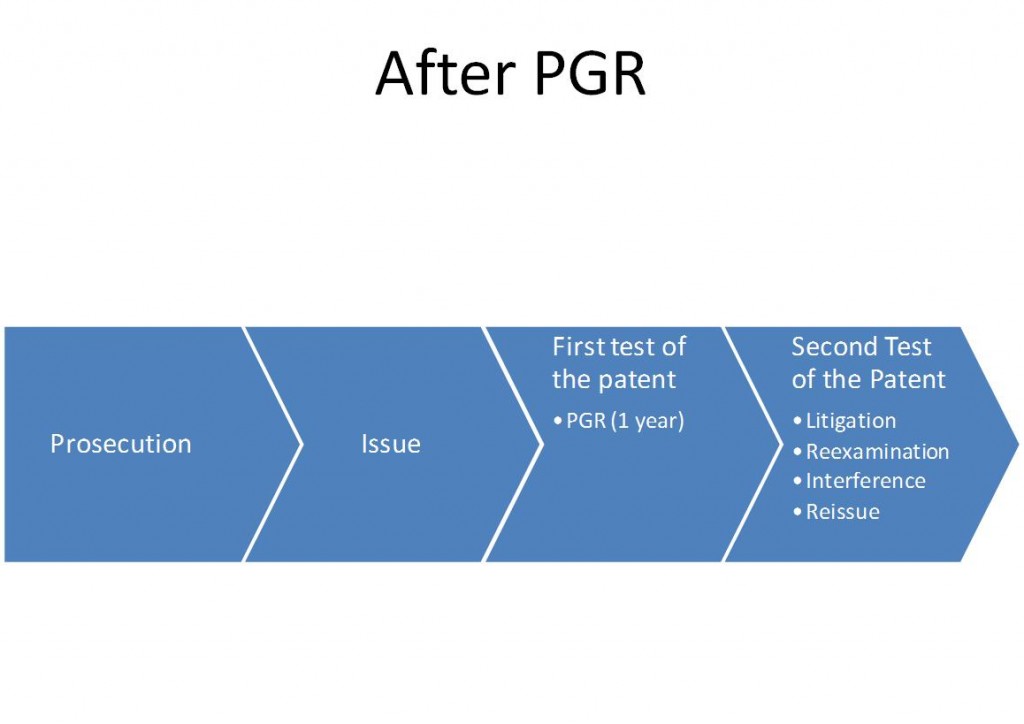
If PGR is enacted, the patent may be tested first by the PGR process if initiated in the first year of the patent’s issue. If the patent survives, the second test will come after PGR proceedings. That second test may arise from litigation, reexamination, interference (or more likely, a derivation proceeding if the First Inventor To File aspect is passed) and reissue. Depending on the speed of the Patent Office, results could come within the first few years of the life of the patent. So the process is as follows:
If you are a Patent Owner, PGR is one way to test your patent’s strength before going further. Yes, PGR can kill your patent, but it can also strengthen your patent rights should they be correctable early in the life of the patent.
If you are an Accused Infringer (or very likely to become one), PGR gives you a way to challenge bogus patent claims, refine patent term meanings, and sift out improvidently granted patent claims. Your board of directors may find the proceedings to be helpful in making future decisions as to whether to negotiate a license or settlement.
If you are a prosecutor, think of all of the time and energy it takes to understand an invention, get to know the prior art, and draft the patent application, claims, and responses to Office Actions. And how many months did you have to draft and file the patent application, or respond to that Office Action? And how many years trickled by after issuance before the patent was litigated? PGR is a way to quickly see how well you did on technical matters, because (as the bill is currently pending) it is not limited to issues of new prior art. (Of course, PGR will likely also test the issued patent in view of new prior art.) So, instead of years before you get some “feedback” on your work, it could happen in less than a year or two.
If you are a litigator, think of all of the time and energy it takes to understand the technology, get to know the prior art, and sift through the facts. If you are litigation counsel for the Patent Owner, then PGR provides at least an initial litmus test of the strength of the patent. It also provides the Patent Owner more confidence to allow you to move ahead aggressively, depending on how well the patent survives the PGR process.
If you are litigation counsel for the Accused Infringer, PGR provides a way for you to test some theories of unpatentability early in the process. And you can include arguments that are not limited to printed publications and patents. You will be watching to see which claims are likely to survive, and probably focusing on the more important issues of the defense should the patent survive PGR.
If you are a judge, how many times have you listened to oral arguments, conducted hearings, and sifted through voluminous briefs chock full of highly technical information and patent-speak? Your hope is that PGR has either reduced your caseload by killing invalid patents before they can be litigated, or refined the patents before you for (hopefully) more definite issues of infringement. And if you believe that the patents coming to you will be of a higher quality after surviving PGR, you can expect more productive settlement conferences as the parties have already had to contemplate the inevitable battle before coming to your chambers.
Of course, the actual enactment of the PGR process and time will tell how successful it can be in eliminating poor patent claims. But the overall process may serve to shorten the cycle of correction of patents and provide everyone involved more information and sooner. PGR can kill patents, but it can also improve patent claims early in the process, resulting in a greater success of collection of past damages in subsequent litigation. PGR can also help raise the visibility of good and bad patent drafting practices sooner for patent prosecutors by providing quicker feedback on the outcomes of at least an initial test of the patent.





