
Advertisement

May 22, 2013

The Office of Management and Budget (OMB) Demands Answers About Insider Risks

Risk Management Monitor

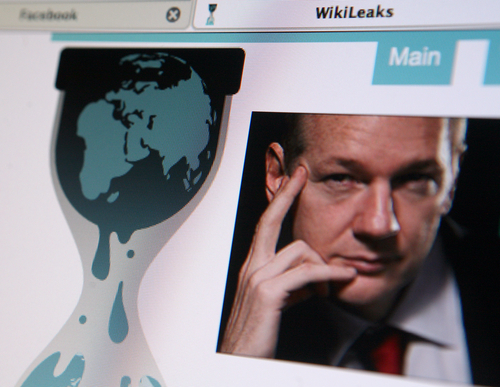
WikiLeaks has really stirred things up for the U.S. Government, ushering in questions regarding its policy for preventing insider data leaks. And that’s a good thing.

The Office of Management and Budget (OMB) has asked government agencies to detail their strategies for minimizing insider risk.

A highly detailed 11-page memo prepared by U.S. intelligence officials and distributed by Jacob J. Lew, director of the White House Office of Management and Budget, suggests that agencies use psychiatrists and sociologists to measure the “relative happiness” of workers or their “despondence and grumpiness” as a way to assess their trustworthiness.

The memo was sent to senior officials at all agencies that use classified material. And though it is clear that the White House is in need of more rigid data leak prevention policies, some see the memo as paranoia. Steven Aftergood, a national security specialist for the Federation of American Scientists, claims the Obama administration is borrowing heavily from strict programs used at the CIA and other intelligence agencies to root out potential spies. He even goes so far as to call the idea of requiring workers to report any contacts with members of the news media as “triply absurd.”

But for others, what’s absurd is the fact that 200,000 diplomatic cables between the U.S. State Department and its diplomatic missions were leaked. The implications of such an act will most likely be serious and far reaching in regards to the U.S.-led war on terror.

What do you think?

Risk Management Magazine and Risk Management Monitor. Copyright 2013 Risk and Insurance Management Society, Inc. All rights reserved.

About the Author

Editor

Emily Holbrook is the editor of Risk Management magazine and the Risk Management Monitor blog.

212-655-5915

Boost: AJAX core statistics

Legal Disclaimer

You are responsible for reading, understanding and agreeing to the National Law Review's (NLR’s) and the National Law Forum LLC's  Terms of Use and Privacy Policy before using the National Law Review website. The National Law Review is a free to use, no-log in database of legal and business articles. The content and links on www.NatLawReview.com are intended for general information purposes only. Any legal analysis, legislative updates or other content and links should not be construed as legal or professional advice or a substitute for such advice. No attorney-client or confidential relationship is formed by the transmission of information between you and the National Law Review website or any of the law firms, attorneys or other professionals or organizations who include content on the National Law Review website. If you require legal or professional advice, kindly contact an attorney or other suitable professional advisor.  

Some states have laws and ethical rules regarding solicitation and advertisement practices by attorneys and/or other professionals. NLR does not accept advertising from attorneys or law firms. The National Law Review is not a law firm nor is www.NatLawReview.com  intended to be an advertisement or a referral service for attorneys and/or other professionals. The NLR does not wish, nor does it intend, to solicit the business of anyone or to refer anyone to an attorney or other professional.  NLR does not answer legal questions nor will we refer you to an attorney or other professional if you request such information from us. 

Under certain state laws the following statements may be required on this website and we have included them in order to be in full compliance with these rules. The choice of a lawyer or other professional is an important decision and should not be based solely upon advertisements. Attorney Advertising Notice: Prior results do not guarantee a similar outcome. Statement in compliance with Texas Rules of Professional Conduct. Unless otherwise noted, attorneys are not certified by the Texas Board of Legal Specialization, nor can NLR attest to the accuracy of any notation of Legal Specialization or other Professional Credentials.