

May 24, 2012

One Year Post-Bilski : How the Decision is Being Interpreted by the BPAI, District Courts, and Federal Circuit -§101 Case Summaries v. 2.0: June 28, 2010 – June 27, 2011

One year ago, on June 28, 2010, the Supreme Court issued its decision in Bilski v. Kappos. The decision held that the machine-or-transformation test is not the exclusive test for patent eligibility, and that the three traditional exclusions of natural phenomena, abstract ideas, and laws of nature still apply. Since that time, 182 decisions involving statutory subject matter eligibility have been issued by the USPTO's Board of Patent Appeals and Interferences ("the Board"). District Courts issued 6 decisions in the past year that substantively addressed statutory subject matter under § 101, while the Federal Circuit issued 3 decisions on the subject. The day after Bilski issued, the Supreme Court denied cert in In re Ferguson, and just recently picked up Mayo Collaborative Servs. v. Prometheus Labs for review.

Following is a summary of each decision that substantively discusses statutory subject matter under § 101 – from the Board and the Courts. Although the Board decisions are not precedential, they offer insight into what patent practitioners can expect in their own appeals. Similarly, both reported and unreported cases from the District Courts and Federal Circuit are provided to round out the statutory subject matter landscape. Section (I) outlines Board cases where the claims were found to be statutory. Section (II) outlines Board cases where the claims were found to be non-statutory. Section (III) provides a look at activity in the Courts.

Some trends from the Courts worth noting:

(1)  The District Courts appear to be very strict when reviewing statutory subject matter – out of the 6 District Court decisions that addressed § 101, only 2 found that the claims at issue were patent-eligible under § 101.

(2) The Federal Circuit has offered some relief for patent owners. Out of the 3 Federal Circuit decisions that addressed § 101, 2 found that the claims at issue were patenteligible.

(3) The Supreme Court is staying close to the patent-eligibility issue, having granted cert in the Prometheus case on appeal from the Federal Circuit.

Some trends from the Board worth noting:

(1) The number of decisions where the claims were held by the Board to be nonstatutory under §101 significantly outweighs the number of decisions where the Board found that the claims satisfied §101. There are about 2.5 non-statutory decisions for every 1 statutory decision.

(2) It is not unusual for the Board to raise a §101 rejection on its own, even if patenteligibilitywas not a subject on appeal, and was not briefed.

(3) The Board still relies heavily on the machine-or-transformation test, although it does look at other factors as well. For most claims that satisfied the machine-or-transformation test, the Board has found them to be patent-eligible without further analysis.

(4) Although it is not an official test, the "mental steps" doctrine rings true – if the claims can be performed purely in the human mind, then they will be non-statutory.

(5) Even if the specification is silent as to whether a computer readable medium can be read on a signal, the Board will likely read a signal into a claim reciting a computer readable medium, rendering it non-statutory.

(6) The panel of judges assigned to a particular appeal matters. As can be seen from the following, several of the Board judges rarely find a claim patent-eligible, and often raise previously non-existent §101 rejections.

(7) There are no guarantees. Similar claims have been treated differently by different panels, and some BPAI judges appear inconsistent in applying the law to seemingly similar claims.

For a full review of §101 Case Summaries v. 2.0: June 28, 2010 – June 27, 2011 and the full text of this artilce please click here:


© 2012 Sterne Kessler

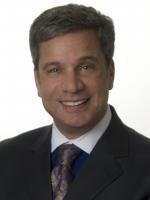
About the Author

Director

Mr. Sterne is a director in the Electronics Group of intellectual property specialty law firm Sterne, Kessler, Goldstein & Fox P.L.L.C.  He is one of the leading patent attorneys in patent reexamination and concurrent patent litigation in the United States.  He specializes in the area of intellectual property for cutting edge technologies in the electronics and computer arenas, the monetization of patents, patent litigation and patent licensing.  Mr. Sterne is well known for his work across a number of technology spaces including software, bioinformatics,...

202-772-8555

About the Author

Director

Ms. Holoubek is a director in the Electronics Group.  She focuses on the preparation and prosecution of patents, including reissues and reexaminations.  She has provided infringement and invalidity analysis in opinions for business method, software, medical and telecommunications patents.  She is active in many aspects of patent portfolio valuation and development of IP strategy, and has prepared reexaminations of patents as part of an overall litigation strategy in a variety of technologies, including biomedical and software...

202-772-8855

Boost: AJAX core statistics

Legal Disclaimer

You are responsible for reading, understanding and agreeing to the National Law Review's (NLR’s) and the National Law Forum LLC's  Terms of Use and Privacy Policy before using the National Law Review website. The National Law Review is a free to use, no-log in database of legal and business articles. The content and links on www.NatLawReview.com are intended for general information purposes only. Any legal analysis, legislative updates or other content and links should not be construed as legal or professional advice or a substitute for such advice. No attorney-client or confidential relationship is formed by the transmission of information between you and the National Law Review website or any of the law firms, attorneys or other professionals or organizations who include content on the National Law Review website. If you require legal or professional advice, kindly contact an attorney or other suitable professional advisor.  

Some states have laws and ethical rules regarding solicitation and advertisement practices by attorneys and/or other professionals. NLR does not accept advertising from attorneys or law firms. The National Law Review is not a law firm nor is www.NatLawReview.com  intended to be an advertisement or a referral service for attorneys and/or other professionals. The NLR does not wish, nor does it intend, to solicit the business of anyone or to refer anyone to an attorney or other professional.  NLR does not answer legal questions nor will we refer you to an attorney or other professional if you request such information from us. 

Under certain state laws the following statements may be required on this website and we have included them in order to be in full compliance with these rules. The choice of a lawyer or other professional is an important decision and should not be based solely upon advertisements. Attorney Advertising Notice: Prior results do not guarantee a similar outcome. Statement in compliance with Texas Rules of Professional Conduct. Unless otherwise noted, attorneys are not certified by the Texas Board of Legal Specialization, nor can NLR attest to the accuracy of any notation of Legal Specialization or other Professional Credentials.