
Advertisement

June 18, 2013

SEC Investigating Shale Gas Producers

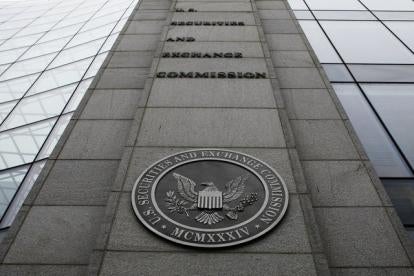
In what appears to be a reaction to recent New York Times articles asserting that some Marcellus Shale gas companies were overbooking their natural gas reserves, the Securities and Exchange Commission is issuing subpoenas to investigate the accuracy of financial statements.  New York Congressman Maurice Hinchey asked the SEC to investigate the issue following publication of the assertions in the New York Times, which questioned how gas companies calculate and publicly disclose performance of shale gas wells.  

Hinchey wants the SEC to consider updating its oil and gas reserve reporting requirements to provide greater disclosure to investors and the public, and proposed that financial statements be subjected to third-party audits.  However, financial statements are now widely subjected to independent audits, and Arthur Brisbane, public editor of the New York Times, has cast considerable doubt on the source material for the articles, describing them as having "serious shortcomings."  The conclusions reached in the article have also been challenged by a number of sources, including a M.I.T. Study Group and a UBS Investment Analyst.  The SEC has not announced whether it will continue issuing subpoenas.

©2013 Greenberg Traurig, LLP. All rights reserved.

About the Author

K. B. Battaglini is licensed to practice law in the state and federal courts of Texas and New York, and has experience in Energy, Environmental and Natural Resources.

713-374-3552

Boost: AJAX core statistics

Legal Disclaimer

You are responsible for reading, understanding and agreeing to the National Law Review's (NLR’s) and the National Law Forum LLC's  Terms of Use and Privacy Policy before using the National Law Review website. The National Law Review is a free to use, no-log in database of legal and business articles. The content and links on www.NatLawReview.com are intended for general information purposes only. Any legal analysis, legislative updates or other content and links should not be construed as legal or professional advice or a substitute for such advice. No attorney-client or confidential relationship is formed by the transmission of information between you and the National Law Review website or any of the law firms, attorneys or other professionals or organizations who include content on the National Law Review website. If you require legal or professional advice, kindly contact an attorney or other suitable professional advisor.  

Some states have laws and ethical rules regarding solicitation and advertisement practices by attorneys and/or other professionals. NLR does not accept advertising from attorneys or law firms. The National Law Review is not a law firm nor is www.NatLawReview.com  intended to be an advertisement or a referral service for attorneys and/or other professionals. The NLR does not wish, nor does it intend, to solicit the business of anyone or to refer anyone to an attorney or other professional.  NLR does not answer legal questions nor will we refer you to an attorney or other professional if you request such information from us. 

Under certain state laws the following statements may be required on this website and we have included them in order to be in full compliance with these rules. The choice of a lawyer or other professional is an important decision and should not be based solely upon advertisements. Attorney Advertising Notice: Prior results do not guarantee a similar outcome. Statement in compliance with Texas Rules of Professional Conduct. Unless otherwise noted, attorneys are not certified by the Texas Board of Legal Specialization, nor can NLR attest to the accuracy of any notation of Legal Specialization or other Professional Credentials.