 i
i
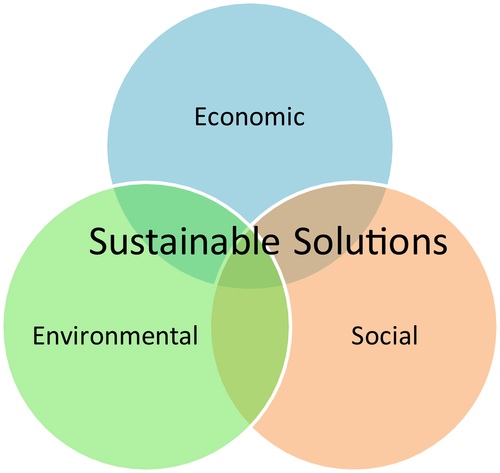
True, businesses need to make money to stay afloat in the competitive business world. But in this modern marketplace, companies are increasingly focusing on remaining profitable while incorporating sustainability. With evidence that business activities are influencing climate change and companies are depleting the earth’s resources at an alarming rate, environmental risks have become business risks.
Marsh recently released a white paper entitled, “Sustainability – Managing Your Risk” that addresses the risks companies face in trying to manage one of the newest business risks. First, the report stresses companies to look for tangible evidence that their own suppliers have signed up to a sustainability code, saying that not only should your company become sustainable, but your company’s supply chain as well.
With legislation passing, companies are realizing their operations may not be considered environmentally friendly. As an example, the European Union enacted the Environmental Liability Directive, meaning that businesses must now ensure that they do not cause damage to water, land or biodiversity.
But many companies believe “going green” is more costly. Though that may be true in the near-term for some instances, the long-term return is proof that green is good.
“There is evidence that changing business practices to a more sustainable model can reap financial rewards. The Fairtrade movement is an example where consumers are willing to pay higher prices to be reassured about how the products have been produced.”
Among the sustainability issues for businesses and society is water (we ran an in-depth feature on this topic in the June 2009 issue). Water-intensive companies (think Coca-Cola, Nestle, Texas Instruments) are now assessing the risk they pose to the areas in which they operate. In fact, the Carbon Disclosure Project is now asking the world’s biggest companies for the first time to disclose how much water they use. And this is no tree-hugging initiative — major investors “with trillions of dollars in assets have backed this call for such information.”
In today’s business world, people’s view of a company is not based simply on what it does, but how the company does it. As Marsh says:
“With the increasing pressure on depleted natural resources and a greater level of scrutiny concerning environmental performance from policymakers and investors, it makes more sense than ever to fully understand the impact that a business is having on the environment and to make changes to business process that are seen to be having a deleterious effect on the environment and society.”
Lagging behind on the issue of sustainability within business operations will eventually mean lagging behind the competition.
The above article is reprinted from the Risk Management Monitor - the official blog of Risk Management magazine.