

May 24, 2012

Taming the Social Media Frontier

Social media offers many opportunities. But to leverage them, you must manage the associated risks.

As social media's ubiquitous influence has spread, the business world has eagerly jumped on board to take advantage of this new way to reach customers. But for every company that has been able to leverage Facebook, LinkedIn and Twitter for its marketing and public relations efforts, there are others that have stumbled and been forced to deal with reputational damage from inappropriate employee posts or tweets. 

For instance, earlier in the year, clothing design company Kenneth Cole found itself in trouble for a tweet sent from its corporate account during the Egyptian riots that read "Millions are in an uproar in #Cairo. Rumor is they heard our new spring collection is now available online." Needless to say, the insensitive comment went viral and Cole quickly apologized, but the damage had already been done. Months later, stories about the incident are still prominent in Google searches for "Kenneth Cole."

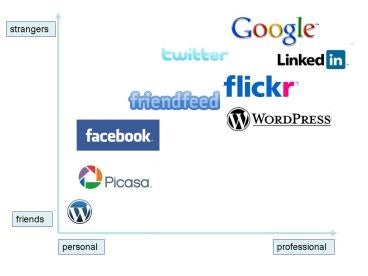
But Kenneth Cole is not alone. Many other companies have made mistakes and many more will do so in the future. Since social media usage straddles the line between professional and personal, the possibility for its misuse increases. And because the threats are unique, organizations have come to realize that they need a specific policy to address social media. But just how many companies have taken steps to address the risks?

As it turns out, less than half. According to a survey of more than 120 multinational employers by Proskauer's International Labor & Employment Group, more than 76% of respondents do use social media for business purposes. And more than 43% have had to deal with employee misuse of social networks -- something that has forced nearly a third to take disciplinary action against employees. But despite these numbers, nearly 45% still do not have a social media policy in place.

This disconnect may reflect the fact that most companies are still relatively new to social media -- almost 65% have been using social media for two years or less. In addition, little consensus has been established regarding what a social media policy should, or can, contain. Regardless of the novelty, however, it is becoming increasingly evident that a policy should be just as important as a social media presence itself.


Risk Management Magazine and Risk Management Monitor. Copyright 2012 Risk and Insurance Management Society, Inc. All rights reserved.

About the Author

Editor in Chief

Morgan O’Rourke is the director of publications for the Risk and Insurance Management Society, Inc. (RIMS) and the editor in chief of Risk Management magazine and the Risk Management Monitor blog.

212-655-5922

Boost: AJAX core statistics

Legal Disclaimer

You are responsible for reading, understanding and agreeing to the National Law Review's (NLR’s) and the National Law Forum LLC's  Terms of Use and Privacy Policy before using the National Law Review website. The National Law Review is a free to use, no-log in database of legal and business articles. The content and links on www.NatLawReview.com are intended for general information purposes only. Any legal analysis, legislative updates or other content and links should not be construed as legal or professional advice or a substitute for such advice. No attorney-client or confidential relationship is formed by the transmission of information between you and the National Law Review website or any of the law firms, attorneys or other professionals or organizations who include content on the National Law Review website. If you require legal or professional advice, kindly contact an attorney or other suitable professional advisor.  

Some states have laws and ethical rules regarding solicitation and advertisement practices by attorneys and/or other professionals. NLR does not accept advertising from attorneys or law firms. The National Law Review is not a law firm nor is www.NatLawReview.com  intended to be an advertisement or a referral service for attorneys and/or other professionals. The NLR does not wish, nor does it intend, to solicit the business of anyone or to refer anyone to an attorney or other professional.  NLR does not answer legal questions nor will we refer you to an attorney or other professional if you request such information from us. 

Under certain state laws the following statements may be required on this website and we have included them in order to be in full compliance with these rules. The choice of a lawyer or other professional is an important decision and should not be based solely upon advertisements. Attorney Advertising Notice: Prior results do not guarantee a similar outcome. Statement in compliance with Texas Rules of Professional Conduct. Unless otherwise noted, attorneys are not certified by the Texas Board of Legal Specialization, nor can NLR attest to the accuracy of any notation of Legal Specialization or other Professional Credentials.


