 i
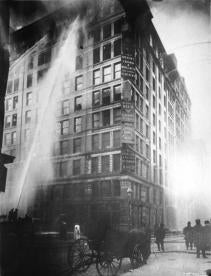
i100 years ago today, a fire killed 146 factory workers in an event that would be called the deadliest workplace disaster in New York City’s history up until the September 11th terrorist attacks. The Triangle Shirtwaist factory fire occurred on March 25, 1911 when a lit cigarette or match (still unclear which) ignited a fire on the 8th floor, which quickly spread to the floors above.
In all, 146 people died, mostly from jumping to their death from the 8th, 9th or 10th floors of the building as some exits were locked to prevent theft and fire escapes proved broken and useless. Through this tragic event, working conditions in the city’s sweatshops improved and garment workers gained support for unionization. The Triangle Shirtwaist fire “was the major impetus that led to developing occupational health and safety measures, fire prevention efforts and the state-based workers compensation system.”
Only months after the horrific fire, the American Society of Safety Engineers was formed and today, its 32,000 members who manage, supervise and consult on safety, health, and environmental issues in industry, insurance, government and education.
It was “watching those women and children, some of them actually holding hands as they jumped from the building from the ninth floor, knowing they were going to die, but preferring not to burn” that led to creation of workplace safety laws, said Mark Oldham, Richmond, Va.-based executive consultant, risk services department, for Allianz S.E.’s Fireman’s Fund Insurance Co.
A number of publications have run pieces remembering the Triangle Shirtwaist factory fire. Here are a few of the best:
- The New York Daily News ties together the Triangle Shirtwaist fire with the Massey mine explosion, the BP oil rig explosion and the labor disputes in Wisconsin.
- ABC News pictorial: Triangle Shirtwaist Fire Remembered
- Property/Casualty 360: The Triangle Shirtwaist Fire and Insurance
- Huffington Post: The Triangle Factory Fire Centennial and Why it Matters Today
- Cornell University: Lecture by Frances Perkins
- New York Times: Triangle Fire: New Leaders Emerge
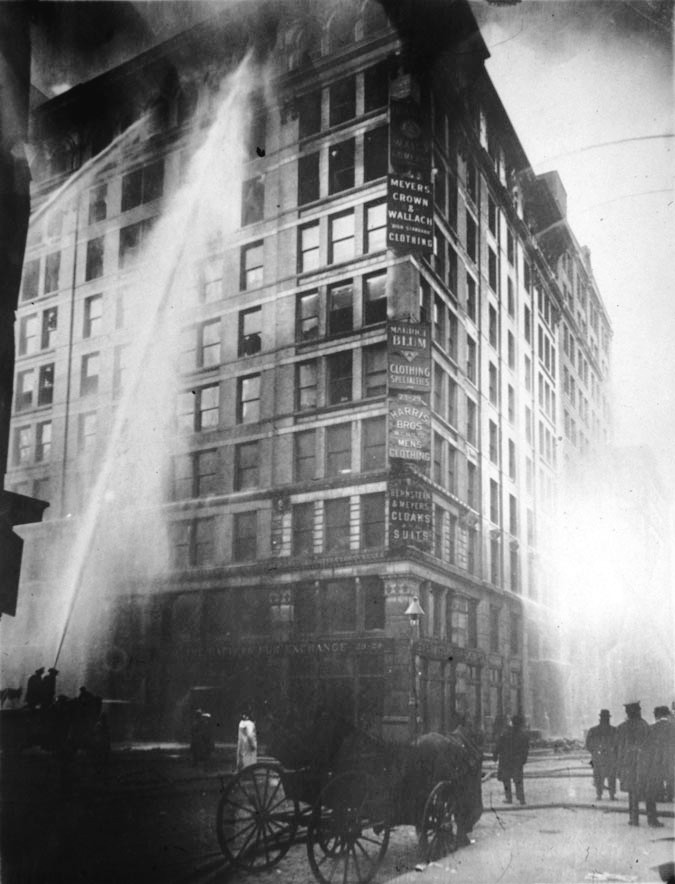
Firefighters battle the blaze at the Triangle Shirtwaist Factory in downtown Manhattan. 146 people, mostly young female