



Advertisement

May 18, 2013

DOJ Official Reiterates Threat to Prosecute Criminally Responsible Corporate Officials for Violations of FD&C Act

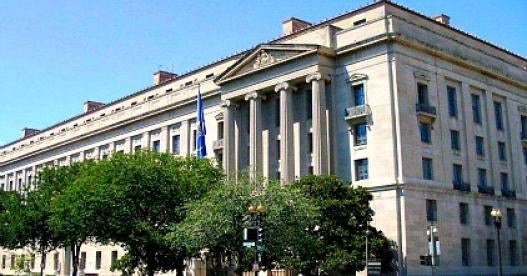
Earlier this month, Assistant Attorney General Tony West of the U.S. Department of Justice (DOJ) gave a speech at the Twelfth Annual Pharmaceutical Regulatory and Compliance Congress in Washington, D.C. Among other things, Mr. West repeated a threat, also made a little over one year ago, to seek to hold responsible corporate officials criminally liable for violations of the Federal Food, Drug & Cosmetic (FD&C) Act under what is known as the Park doctrine. In the earlier announcement, the DOJ noted that because multiple nine and 10-figure fines and corporate guilty pleas do not appear to have deterred certain types of violations, most notably off-label marketing, it may be time to prosecute corporate officers.

The Park doctrine derives its name from a 1975 decision of the U.S. Supreme Court in United States v. Park and should be a concern to executives of FDA-regulated companies. In that case, Acme Markets, Inc. was a national retail food chain and Park was its president. In April, 1970, the FDA inspected Acme's Philadelphia warehouse, found insanitary conditions, and notified Park by mail. In November and December, 1971, FDA found insanitary conditions at Acme's Baltimore warehouse and again informed Park by mail. Finally, in March, 1972, FDA re-inspected the Baltimore warehouse and found evidence of continued insanitary conditions. The Government then prosecuted Acme and Park criminally. Acme pled guilty and Park pled not guilty but was convicted by a jury.

At trial, the Government introduced evidence that Park had received the warning letters arising out of the inspections and, as the president of Acme, had the power to remedy the violations. In defense, Park testified that he had delegated authority to remedy the problems to trusted employees. Indeed, some measures were taken to fix the problems, but obviously they were inadequate. An appellate court had reversed Park's conviction because the jury was not instructed that they had to find Park had engaged in "wrongful action." The Supreme Court reversed again, however, concluding essentially that Park could be found guilty simply because he had the authority to prevent or correct the violations and failed to do so:

[T]he Government establishes a prima facie case when it introduces evidence sufficient to warrant a finding by the trier of facts that the defendant had, by reason of his position in the corporation, responsibility and authority either to prevent in the first instance, or promptly to correct, the violation complained of, and that he failed to do so.

The Supreme Court tied this high standard to the nature of the regulated industries:

The requirements of foresight and vigilance imposed on responsible corporate agents are beyond question demanding, and perhaps onerous, but they are no more stringent than the public has a right to expect of those who voluntarily assume positions of authority in business enterprises whose services and products affect the health and well-being of the public that supports them.

In this connection, it is important to note that "responsible corporate officials" are not limited to those directly responsible for the violation. Rather, as the quotations state, any executive whose position has the responsibility and authority to prevent or correct the violation is potentially at risk.

The message is clear. If you are an executive who becomes aware of FDA violations and whose position includes responsibility over the area in question and authority to correct the issue, personally assure that it gets corrected or at a minimum create a documented record that you did everything in your power to get it corrected. In a case of insanitary conditions, it is possible to assure yourself that any problems on an inspection report have been corrected, to implement any necessary procedures designed to prevent their recurrence, and to follow-up to ensure the procedures are being followed. In other cases, such as off-label marketing by field sales representatives, it may be impossible to assure personally that each sales person is following the complex rules. It is possible, however, to make sure they are trained in the rules, understand the illegality and consequences of violations, and suffer some consequence (which can be proportional to the number and severity of violations) if they violate the rules. The key is to do what is within your power to prevent and correct any violations and to document that you have done so.


© 2013 BARNES & THORNBURG LLP

About the Author

Partner

Lynn C. Tyler is a partner and registered patent lawyer in the firm’s Intellectual Property Department. Mr. Tyler helps innovative companies secure and preserve their market position and competitive advantage by navigating their way through the FDA to the marketplace and enforcing their intellectual property rights, which often must be protected against imitators who seek to reap where they have not sown. He litigates intellectual property matters and represents clients at virtually all stages of the process, including pre-litigation counseling, alternative dispute resolution,...

317-231-7392

About the Author

Of Counsel

Nicolette R. Hudson is of counsel in the Columbus office of Barnes & Thornburg, where she is a member of the firm’s Intellectual Property Department. Ms. Hudson focuses her practice on trademark and copyright prosecution, counseling and enforcement, as well as trademark, unfair competition and copyright litigation.

614-628-1417

Contributors

Of Counsel

Hae Park-Suk is of counsel in the Washington, D.C., office and a member of the Intellectual Property Department. Ms. Park-Suk counsels clients on the selection, adoption, availability, and proper use of trademarks. Her practice consists of searching and clearing trademarks, prosecuting domestic and international trademark applications, managing extensive foreign trademark portfolios, assisting clients in planning and structuring their worldwide trademark strategies, assisting clients in protecting and enforcing their trademarks in the U.S. and worldwide, coordinating intellectual...

202-408-6919

About the Author

Partner

Larry A. Mackey, a partner in Barnes & Thornburg’s Indianapolis, Indiana office, concentrates on white collar crime defense and complex litigation. Mr. Mackey joined Barnes & Thornburg in 1998 after 18 years as a federal prosecutor and three years as a state prosecutor. He concluded his Department of Justice service on the prosecution team responsible for the convictions of the Oklahoma City bombing defendants. Mr. Mackey tried both cases and delivered the prosecution's closing argument in 

317-231-7236

About the Author

Partner

Solomon L. Wisenberg is a partner in the Washington, D.C. office and co-chair of the White Collar Crime Defense Practice Group. He has more than two decades of experience as lead counsel in complex white collar crime investigations and jury trials.

202-371-6378

About the Author

Partner

Patrick J. Cotter is a partner in Barnes & Thornburg LLP’s Chicago office, where he is a member of the firm’s Litigation Department and White Collar Crime Defense Practice Group. Mr. Cotter has experience assisting clients with a wide range of matters in the area of criminal defense, including allegations of financial fraud, government contract work, tax matters, internal corporate investigations, actions under the Racketeer Influenced and Corrupt Organizations Act (RICO), appellate and post-conviction work and international criminal law.

312-338-5939

Boost: AJAX core statistics

Legal Disclaimer

You are responsible for reading, understanding and agreeing to the National Law Review's (NLR’s) and the National Law Forum LLC's  Terms of Use and Privacy Policy before using the National Law Review website. The National Law Review is a free to use, no-log in database of legal and business articles. The content and links on www.NatLawReview.com are intended for general information purposes only. Any legal analysis, legislative updates or other content and links should not be construed as legal or professional advice or a substitute for such advice. No attorney-client or confidential relationship is formed by the transmission of information between you and the National Law Review website or any of the law firms, attorneys or other professionals or organizations who include content on the National Law Review website. If you require legal or professional advice, kindly contact an attorney or other suitable professional advisor.  

Some states have laws and ethical rules regarding solicitation and advertisement practices by attorneys and/or other professionals. NLR does not accept advertising from attorneys or law firms. The National Law Review is not a law firm nor is www.NatLawReview.com  intended to be an advertisement or a referral service for attorneys and/or other professionals. The NLR does not wish, nor does it intend, to solicit the business of anyone or to refer anyone to an attorney or other professional.  NLR does not answer legal questions nor will we refer you to an attorney or other professional if you request such information from us. 

Under certain state laws the following statements may be required on this website and we have included them in order to be in full compliance with these rules. The choice of a lawyer or other professional is an important decision and should not be based solely upon advertisements. Attorney Advertising Notice: Prior results do not guarantee a similar outcome. Statement in compliance with Texas Rules of Professional Conduct. Unless otherwise noted, attorneys are not certified by the Texas Board of Legal Specialization, nor can NLR attest to the accuracy of any notation of Legal Specialization or other Professional Credentials.


