 i
iThe tragic juxtaposition between the death toll from the 7.0 magnitude earthquake that devastated Haiti in January 2010 and the 8.8 quake that hit Chile less than two months later was glaring. The former killed an estimated 250,000 while the later left less than 600 dead.
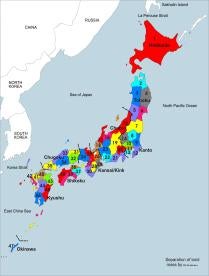
It is still far too early to have even a close guess on the number of casualties from this morning’s 8.9 magnitude quake and the resulting tsunami in Japan. But while even one life lost makes this a tragedy, it seems as though the final total could be far below the horrific worst-case scenario that I envisioned when first hearing of the disaster’s size.
And much like was the case in Chile, Japan’s building codes had a lot to do with it.
From seawalls that line stretches of Japan’s coastline, to skyscrapers that sway to absorb earthquakes, to building codes that are among the world’s most rigorous, no country may be better prepared to withstand earthquakes than Japan.
The Times’ piece goes into more detail about tsunami protection.
Over the years, Japan has spent billions of dollars developing the most advanced technology against earthquakes and tsunamis. The Japanese, who regularly experience smaller earthquakes and have lived through major ones, know how to react to quakes and tsunamis because of regular drills — unlike Southeast Asians, many of whom died in the 2004 Indian Ocean tsunami because they lingered near the coast.
Communities along Japan’s coastline, especially in areas that have been hit by tsunamis in the past, tend to be the best prepared. Local authorities can usually contact residents directly through warning systems set up in each home; footpaths and other escape routes leading to higher ground tend to be clearly marked.
In the country that gave the world the word tsunami, Japan, especially in the 1980’s and 1990’s, built concrete seawalls in many communities, some as high as 40 feet. In addition, some coastal towns have set up networks of sensors that can sound alarms in every residence and automatically closed floodgates when an earthquake strikes to prevent waves from surging up rivers. Ports are sometimes equipped with raised platforms.
Resiliency in action.
Recently, I profiled the Institute of Business and Home Safety Research Center, an organization that is striving to improve building standards and the resiliency of building materials by testing them. Hopefully, in tragedy, we can also get a lesson that shows the critical importance of enforcing building codes based upon good science.
UPDATE: Here’s an image that further shows the need for good science. The project path of the tsunami resulting from the quake. (via Business Insider)