 i
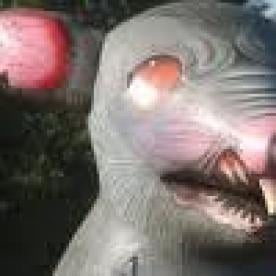
iOn May 26, the National Labor Relations Board (NLRB or Board) ruled that a union's display of a large inflatable rat balloon at a secondary employer's premises in order to protest the labor practices of its nonunion contractor is not coercive and does not violate U.S. labor law.
The case, Sheet Metal Workers International Association, Local 15 (Brandon Regional Medical Center), 361 NLRB No. 162 (May 26, 2011), was originally decided by the Board in January 2006. In its original decision, the Board determined that a mock funeral staged by the union in front of a hospital was equivalent to picketing, and therefore constituted an unlawfully coercive secondary boycott. The Board found that it was unnecessary to reach the issue of the legality of the inflatable rat balloon in this decision.
The union, Sheet Metal Workers International Association, Local 15, appealed the decision to the U.S. Court of Appeals for the District of Columbia Circuit. On June 19, 2007, the D.C. Circuit reversed the Board's decision, and held that the union's mock funeral outside of the hospital was not picketing or otherwise coercive. The court remanded the case to the Board for review of other issues in the case, one of which was whether the use of the inflatable rat constituted an unlawful secondary boycott.
In analyzing this issue, the Board relied on its reasoning from its opinion in Carpenters Local 1506 (Eliason & Knuth of Arizona, Inc.), 355 NLRB No. 159 (2010), that the display of large stationary banners at secondary employer locations is not unlawful. In Eliason, the Board stated that the determinative question as to whether union activity at a secondary site violates Section 8(b)(4)(ii)(B) of the National Labor Relations Act is whether it involves confrontation or persuasion. Regarding the use of stationary banners in particular, the Board characterized the use of banners as "peaceful persuasion," and distinguished them from picketing by noting that picketing involved an "element of confrontation" as well as a "physical, or, at least, a symbolic confrontation between the picketers and those entering the worksite" that the use of banners did not. The Board further differentiated the use of banners from picketing by describing picketing as an activity combining the carrying of picket signs with the "persistent patrolling" of the picketers back and forth in front of an entrance to a worksite.
In the instant case, the Board applied its analysis in Eliason to the use of a 16-foot-tall inflatable rat balloon. In doing so, the Board stated that the rat balloon "entailed no element of confrontation," and was "stationary and located at sufficient distances from the vehicle and building entrances to the hospital that visitors were not confronted by an actual or symbolic barrier as they arrived at, or departed from, the hospital." The Board rejected the idea that the use of the rat balloon was equivalent to picketing and, instead, deemed it to be "symbolic speech."
As a result of this decision and the decision in Eliason, unions are likely to abandon traditional picketing in favor of using banners and/or inflatable rats in order to apply pressure on secondary employers. In general, it should be expected that the Board will hold that such tactics are beyond the reach of the National Labor Relations Act's secondary boycott provisions, but it is possible that a violation would occur if union agents engage in other coercive conduct in conjunction with the display of a banner and/or rat balloon. For instance, a violation may still be found if the union agents block ingress or egress to the secondary employer's premises, engage in threats or acts of violence, or use bullhorns or loudspeakers to amplify their protest at an "extremely high volume."