



May 24, 2012

Seventh Circuit Finds Certain Food Labeling Fraud Claims Are Preempted

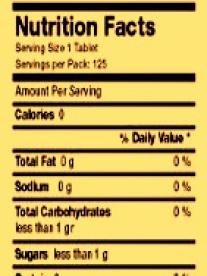
Earlier this month, the United States Court of Appeals for the Seventh Circuit, which has jurisdiction over federal cases arising in Illinois, Indiana, and Wisconsin, ruled that a plaintiff's claims for fraud in certain food labeling were preempted by federal law, specifically the Food, Drug & Cosmetic (FDC) Act and related FDA regulations. The case was Carolyn Turek v. General Mills and Kellogg and involved the labeling of the defendants' "chewy bars." The "Nutrition Facts" portion of the label stated that a serving contained 9 grams of "Dietary Fiber" and that 9 grams represented 35 percent of the "Daily Value" of dietary fiber. A circle on the front of the box also stated "35% of your daily fiber."

Ms. Turek's Complaint alleged that the principal type of fiber, by weight, in the defendants' chewy bars is inulin from chicory root extract. Ms. Turek alleged that inulin so extracted was "non-natural" because it was processed and that it provided fewer of the health benefits of consuming fiber than other types of fiber and, indeed, was actually harmful to certain people. The Complaint alleged that the labeling did not include any disclaimer about the inferior nature of the type of fiber in the defendants' chewy bars.

The court stated that the Nutrition Labeling and Education Act of 1990 blocks states from imposing any food labeling requirement that is not identical to the requirements of section 343(r) of the FDC Act, 21 U.S.C. § 343(r). Although states can ask the FDA for an exemption from this "identical" requirement, the court noted that Illinois had not done so. Thus, the court turned to the labeling requirements of the FDC Act and found that section 343(q)(1)(D) requires labels to state "the amount of  ... dietary fiber ... contained in each serving size or other unit of measure." The court further observed that the labels of the defendants' chewy bars complied with the FDA's regulations for dietary fiber found at 21 C.F.R. § 101.54(d) and for health claims for dietary fiber found at 21 C.F.R. § 101.76.

With that background, the court ruled that the disclaimers about the alleged inferiority of inulin that Ms. Turek wanted the defendants to add to the labels of their chewy bars were not identical to the requirements of federal law, "and so they are barred." The disclaimers were not required by federal law and therefore could not be required by states. The court ordered the plaintiff's case to be dismissed with prejudice.

Additionally, the court noted Ms. Turek based her claim on the Illinois Consumer Fraud and Deceptive Business Practices Act. That Act expressly does not apply to "actions or transactions specifically authorized by laws administered by any regulatory body ... of ... the United States." Because the statements about dietary fiber on the labels of the defendants' products were authorized by federal regulations, the court found an independent basis to dismiss the plaintiff's claim.

The Seventh Circuit's Turek decision is important not only because of the end result, but also because the court's analysis was primarily legal; that is, the court's decision did not depend on any facts other than the contents of the defendants' labels. The rest of the decision flowed from the language of the FDC Act and the FDA implementing regulations. Although the Court's opinion is largely silent on the proceedings in the lower court, this case could have been - and future cases based on similar allegations certainly should be - resolved without the expensive and time-consuming discovery into the truth of the plaintiff's allegations.


© 2012 BARNES & THORNBURG LLP

About the Author

Partner

Lynn C. Tyler is a partner and registered patent lawyer in the firm’s Intellectual Property Department. Mr. Tyler helps innovative companies secure and preserve their market position and competitive advantage by navigating their way through the FDA to the marketplace and enforcing their intellectual property rights, which often must be protected against imitators who seek to reap where they have not sown. He litigates intellectual property matters and represents clients at virtually all stages of the process, including pre-litigation counseling, alternative dispute resolution,...

317-231-7392

About the Author

Of Counsel

Nicolette R. Hudson is of counsel in the Columbus office of Barnes & Thornburg, where she is a member of the firm’s Intellectual Property Department. Ms. Hudson focuses her practice on trademark and copyright prosecution, counseling and enforcement, as well as trademark, unfair competition and copyright litigation.

614-628-1417

Contributors

Of Counsel

Hae Park-Suk is of counsel in the Washington, D.C., office and a member of the Intellectual Property Department. Ms. Park-Suk counsels clients on the selection, adoption, availability, and proper use of trademarks. Her practice consists of searching and clearing trademarks, prosecuting domestic and international trademark applications, managing extensive foreign trademark portfolios, assisting clients in planning and structuring their worldwide trademark strategies, assisting clients in protecting and enforcing their trademarks in the U.S. and worldwide, coordinating intellectual...

202-408-6919

Boost: AJAX core statistics

Legal Disclaimer

You are responsible for reading, understanding and agreeing to the National Law Review's (NLR’s) and the National Law Forum LLC's  Terms of Use and Privacy Policy before using the National Law Review website. The National Law Review is a free to use, no-log in database of legal and business articles. The content and links on www.NatLawReview.com are intended for general information purposes only. Any legal analysis, legislative updates or other content and links should not be construed as legal or professional advice or a substitute for such advice. No attorney-client or confidential relationship is formed by the transmission of information between you and the National Law Review website or any of the law firms, attorneys or other professionals or organizations who include content on the National Law Review website. If you require legal or professional advice, kindly contact an attorney or other suitable professional advisor.  

Some states have laws and ethical rules regarding solicitation and advertisement practices by attorneys and/or other professionals. NLR does not accept advertising from attorneys or law firms. The National Law Review is not a law firm nor is www.NatLawReview.com  intended to be an advertisement or a referral service for attorneys and/or other professionals. The NLR does not wish, nor does it intend, to solicit the business of anyone or to refer anyone to an attorney or other professional.  NLR does not answer legal questions nor will we refer you to an attorney or other professional if you request such information from us. 

Under certain state laws the following statements may be required on this website and we have included them in order to be in full compliance with these rules. The choice of a lawyer or other professional is an important decision and should not be based solely upon advertisements. Attorney Advertising Notice: Prior results do not guarantee a similar outcome. Statement in compliance with Texas Rules of Professional Conduct. Unless otherwise noted, attorneys are not certified by the Texas Board of Legal Specialization, nor can NLR attest to the accuracy of any notation of Legal Specialization or other Professional Credentials.


