

May 24, 2012

NAIC ADOPTS THE REINSURANCE REGULATORY MODERNIZATION PROPOSAL

In its Winter Meeting, the National Association of Insurance Commissioners (NAIC) adopted the Reinsurance Regulatory Modernization Proposal drafted and previously adopted by the Reinsurance Task Force of the Financial Condition (E) Committee.  The proposal as adopted, would allow ceding insurers to take credit for reinsurance assumed by unauthorized, unaccredited reinsurers, without regard to the cedents’ domiciliary states’ collateral requirements. 

The proposal contemplates two new classes of reinsurers.  The first class of reinsurer would be National Reinsurers, which are U.S. reinsurers licensed and domiciled in one state, referred to as the “Home State”, that are permitted to conduct business in that state and the entire domestic market.  The second class of reinsurers contemplated under the proposal would be Point of Entry Reinsurers (“POE Reinsurers”), which are non-reinsurers certified by a point of entry state (“POE State”) to provide creditable reinsurance to the U.S. market.  A single state would be responsible for regulating each National Reinsurer and POE Reinsurer. 

With respect to National Reinsurers, the home state would be responsible for approving licensure, conducting solvency examinations, insuring compliance with applicable state law, and establishing the reinsure’s rating for collateral purposes.  With respect to POE Reinsurers, the  POE States would be responsible for entering into a supervisory recognition framework with supervisors in non-U.S. jurisdictions, certifying POE Reinsurers, establishing the reinsure’s rating for collateral purposes, adjusting such rating for collateral purposes, consulting with non-U.S. regulators regarding any issues with POE Reinsurers, advising all host states of such issues, and receiving annual fees.  Finally, under the proposal, reinsurers are not required to become National or POE Reinsurers.  Rather, they may continue to conduct business under the existing regulatory framework in accordance with the current NAIC model credit for reinsurance law as adopted by the states. 

The proposal also contemplates the creation of a new NAIC Reinsurance Supervision Review Department (“RSRD”) to evaluate and establish such standards for such supervisors.  The proposal charges the RSRD with the responsibility to evaluate the regulatory framework of non-U.S. jurisdictions for the purpose of identifying a list of recognized jurisdictions from which non-U.S. reinsurers may apply for licensure as POE Reinsurer

The proposal, if implemented, would potentially reduce the amount of collateral an unauthorized, unaccredited reinsurer must post in order for an admitted, ceding insurer to take financial statement credit.  As set forth in the proposal, the home state or POE supervisor is charged with rating National and POE Reinsurers for the purpose of determining collateral requirements.  The proposal contemplates a five tier system, which creates a sliding scale of collateral requirements, ranging from the highest tier, Tier 1 with zero percent collateral requirements, to the lowest tier, Tier 5, requiring 100% collateral requirements.  With respect to National Reinsurers, as U.S. state law protects policyholders and insures stability of the U.S. Financial system, such reinsurers would not have to post collateral if they are rated in Tiers 1-3 by its home state supervisor. 

The NAIC proposal contemplates that it would be implemented through Federal Regulation in order to promote uniformity across the 50 States and the District of Columbia.


© 2009 Clark HIll PLC.

About the Author

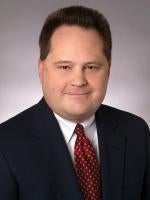
Benjamin A. Blume is a member in Clark Hill’s Chicago office. He is co-chair in Clark Hill’s new Insurance and Reinsurance Practice Group, which will focus on representing client’s in all aspects of the insurance and reinsurance business, including claims counseling, litigation and arbitration, business transactions and tax matters, regulatory issues and government relations, and formation of captive insurers and risk retention groups. His practice includes the handling of issues involving commercials, primary, umbrella, excess and surplus lines, and...

312-985-5937

John D. LaBarbera is a member in Clark Hill’s Chicago office. He is co-chair in Clark Hill’s new Insurance and Reinsurance Practice Group, which will focus on representing client’s in all aspects of the insurance and reinsurance business, including claims counseling, litigation and arbitration, business transactions and tax matters, regulatory issues and government relations, and formation of captive insurers and risk retention groups. He represents insurers in all aspects of their business, including claims counseling, litigation, and dispute resolution...

312-985-5936

Boost: AJAX core statistics

Legal Disclaimer

You are responsible for reading, understanding and agreeing to the National Law Review's (NLR’s) and the National Law Forum LLC's  Terms of Use and Privacy Policy before using the National Law Review website. The National Law Review is a free to use, no-log in database of legal and business articles. The content and links on www.NatLawReview.com are intended for general information purposes only. Any legal analysis, legislative updates or other content and links should not be construed as legal or professional advice or a substitute for such advice. No attorney-client or confidential relationship is formed by the transmission of information between you and the National Law Review website or any of the law firms, attorneys or other professionals or organizations who include content on the National Law Review website. If you require legal or professional advice, kindly contact an attorney or other suitable professional advisor.  

Some states have laws and ethical rules regarding solicitation and advertisement practices by attorneys and/or other professionals. NLR does not accept advertising from attorneys or law firms. The National Law Review is not a law firm nor is www.NatLawReview.com  intended to be an advertisement or a referral service for attorneys and/or other professionals. The NLR does not wish, nor does it intend, to solicit the business of anyone or to refer anyone to an attorney or other professional.  NLR does not answer legal questions nor will we refer you to an attorney or other professional if you request such information from us. 

Under certain state laws the following statements may be required on this website and we have included them in order to be in full compliance with these rules. The choice of a lawyer or other professional is an important decision and should not be based solely upon advertisements. Attorney Advertising Notice: Prior results do not guarantee a similar outcome. Statement in compliance with Texas Rules of Professional Conduct. Unless otherwise noted, attorneys are not certified by the Texas Board of Legal Specialization, nor can NLR attest to the accuracy of any notation of Legal Specialization or other Professional Credentials.