

May 24, 2012

Pitfalls of Provisional Patent Applications

A poorly written provisional application can have dire consequences for the unsuspecting applicant. A patent application – provisional or not – must meet all the disclosure requirements of Section 112. That is, each application must contain a full and complete enabling description of the invention. Claims are entitled to the benefit of the filing date of the provisional application if they are fully supported in the provisional application. If not, the claims will only be entitled to the filing date of the utility application.

This is particularly important if there is a public disclosure – either before or after the provisional filing date. In the U.S., the public disclosure can be used as a basis for rejection of all claims not explicitly supported in the provisional application if the disclosure is before the filing date of the provisional application.

The problem is even worse in most foreign countries. Many foreign countries do not have a one-year grace period so a public disclosure after the filing date of the provisional application can be used as a basis for rejection of all claims not explicitly supported in the provisional.

Thus, the description of a provisional application should be written just like any other patent application. Use caution when basing a provisional application on a manuscript or scientific article. These tend to describe the invention in very narrow terms with little more than the specific experimental conditions and results. Without more, the provisional application will not be able to support broad claims to the invention and only the narrow embodiments taught in the article will be entitled to the benefit of the provisional filing date. The lesson – a hastily-filed cover page provisional may not protect your foreign rights.

That said, the provisional application can be a very useful tool to provide an additional year of priority at a relatively low cost, particularly when the ultimate end use and market are not fully developed at the time the application is filed. Take the time and effort to fully and completely describe the invention in the provisional application and it will serve you well. 

© MICHAEL BEST & FRIEDRICH LLP

About the Author

Partner

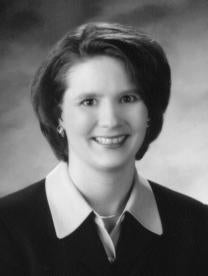
Charlene Yager is a partner in the Intellectual Property Practice Group.  Ms. Yager concentrates her practice on patent procurement and portfolio management in Life Sciences.  Her experience includes inventions relating to small molecules, methods of treatment, particularly cancer therapies, pharmaceuticals, chemical products, biotech research tools and biotech inventions, including tissue engineering.  Ms. Yager also conducts due diligence investigations, non-infringement analyses and prepares non-infringement and invalidity opinions. 

608-283-2249

Boost: AJAX core statistics

Legal Disclaimer

You are responsible for reading, understanding and agreeing to the National Law Review's (NLR’s) and the National Law Forum LLC's  Terms of Use and Privacy Policy before using the National Law Review website. The National Law Review is a free to use, no-log in database of legal and business articles. The content and links on www.NatLawReview.com are intended for general information purposes only. Any legal analysis, legislative updates or other content and links should not be construed as legal or professional advice or a substitute for such advice. No attorney-client or confidential relationship is formed by the transmission of information between you and the National Law Review website or any of the law firms, attorneys or other professionals or organizations who include content on the National Law Review website. If you require legal or professional advice, kindly contact an attorney or other suitable professional advisor.  

Some states have laws and ethical rules regarding solicitation and advertisement practices by attorneys and/or other professionals. NLR does not accept advertising from attorneys or law firms. The National Law Review is not a law firm nor is www.NatLawReview.com  intended to be an advertisement or a referral service for attorneys and/or other professionals. The NLR does not wish, nor does it intend, to solicit the business of anyone or to refer anyone to an attorney or other professional.  NLR does not answer legal questions nor will we refer you to an attorney or other professional if you request such information from us. 

Under certain state laws the following statements may be required on this website and we have included them in order to be in full compliance with these rules. The choice of a lawyer or other professional is an important decision and should not be based solely upon advertisements. Attorney Advertising Notice: Prior results do not guarantee a similar outcome. Statement in compliance with Texas Rules of Professional Conduct. Unless otherwise noted, attorneys are not certified by the Texas Board of Legal Specialization, nor can NLR attest to the accuracy of any notation of Legal Specialization or other Professional Credentials.